Overview of Bridles, Bits, and Materials
The connection between rider's hand and horse's head is one of the most sensitive elements in equestrian sports. Choosing the right bridle and bit is crucial in determining how sensitive, precise, and, above all, pain-free the communication between human and animal is.
For beginners, the market often seems overwhelming: from the classic snaffle bridle to harsh curb bits and modern, bitless alternatives, the selection is vast. This article provides an initial overview of the most important types of bridles and explains how the different materials affect the horse's mouth.
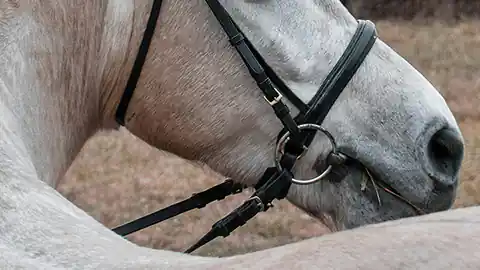
©
Julien Mussard / Unsplash SourceThe Most Important Bridles Compared
Before we delve into the individual models in future articles, here is a basic distinction between the four main bridle categories:
Snaffle Bridle (General)
The term "snaffle bridle" refers to the complete headpiece made of leather or synthetic material that is fitted to the horse. It consists of the headpiece, the cheekpieces (which hold the bit), the browband, and usually a noseband. The snaffle bridle is the ultimate all-rounder in equestrian sports – from training young horses to show jumping and leisure riding.
Snaffle Bit
The snaffle bit is the most commonly used type of bit within a bridle.
- Its defining characteristic: It has movable, round rings on the outside. The bit itself can be single-jointed (with a joint in the middle) or double-jointed (with a flat center link).
- The effect: Rein aids are transmitted directly and without leverage to the horse's tongue and bars (the toothless edge of the lower jaw). The movable rings allow the horse to slightly lift the bit in its mouth, minimizing pressure.
Double Bridle
The double bridle is an advanced type of bridle used primarily in advanced dressage (from level L/M upwards) or in Western riding (bit).
- Characteristics: A double bridle combines a rigid curb bit with metal shanks (levers) and a curb chain, as well as an additional, thin bradoon bit. The rider uses two pairs of reins.
- The effect: The shanks create significant leverage when the reins are pulled. The pressure is transmitted not only to the mouth but also to the poll and, via the curb chain, to the horse's lower jaw. The double bridle should only be used by very experienced and sensitive riders.
Bitless halters and bridles (e.g., sidepull, hackamore)
As the name suggests, no metal or plastic comes into contact with the horse's mouth.
- The key feature: The reins are attached to rings that sit directly on the noseband of the halter.
- The effect: Signals are transmitted via pressure on the bridge of the nose, the jaw, or the poll. They are ideal for horses with dental problems, sensitive mouths, or for relaxed recreational riding.
Digital Billboard

©
horseback-riding.net1. Placement: € 138 / Year
Digital advertising for a sensational price with a static link for your do-follow-dreams is available here. Get your customers here, let your business grow with us. It's: First come, first serve!
Online-Ads Horses & Riding©
horseback-riding.net2. Placement: € 148 / Year
Digital advertising for a sensational price with a static link for your do-follow-dreams is available here. Get your customers here, let your business grow with us. It's: First come, first serve!
Online-Ads Horses & RidingMaterials Science for Horse Bits: What is the Purpose of the Differences?
Not only the shape of the bit is crucial, but also the material the horse chews on. The choice of material influences the weight, the temperature in the mouth, and the horse's willingness to accept the bit (chewing activity).
Metal: The Durable Classic
Metal bits are extremely durable, hygienic, and precise. However, there are subtle differences in the alloys:
- Stainless steel: Very robust, rust-free, and tasteless. Disadvantage: Stainless steel initially feels very cold in the horse's mouth in winter and does not naturally stimulate saliva production.
- Copper/Brass Alloys (e.g., Aurigan, Sensogan, Sweet Copper): These modern, high-tech metals have a high copper content. Copper oxidizes very easily in the horse's mouth due to saliva. Most horses find this sweet taste very palatable. It stimulates chewing, which relaxes the horse's lower jaw and improves its responsiveness to the aids.
Plastic and Rubber: Focus on Softness
Plastic and rubber bits are often used for very sensitive horses, young horses, or horses that dislike metal in their mouths.
- Plastic (e.g., Apple Mouth, Nathe): These bits are often flexible and quickly adapt to the horse's body heat. Many models are flavored with a light apple taste to increase acceptance. They glide smoothly over the tongue.
- Rubber: Very soft and thick. Caution regarding its effect: Rubber has a so-called "eraser effect" in a dry horse's mouth. If the horse doesn't salivate enough, rubber can rub uncomfortably against the tongue and cause burns. Furthermore, some horses chew through rubber or plastic bits with their molars over time – regular checks are essential.
Leather: The Gentle, Natural Alternative
A true niche product that is gaining more and more fans. Leather bits consist of a core (usually made of nylon or thin wire) that is tightly encased in tanned leather.
- The purpose: Leather absorbs saliva in the horse's mouth. This makes it extremely soft and pliable, allowing it to perfectly conform to the anatomy of the horse's mouth. It offers a very natural taste and is extremely popular with almost all horses.

More on Horseback Riding...

©
Gerhard Bögner / pixabay.com SourceGet to know Vienna!
Vienna, Bratislava, Prague and Budapest – four capital cities quite close to each other. Get to know the centrope region, enjoy your stay there and find the most amazing places in this area. Regiotours will help you!
Enjoy the region...
©
R. Vidmar (echonet)Learn Horseback Riding
Why not enjoy the ride on a horse? Not only to go anywhere specific, just try it out. Learn horseback riding, a great way to relax, to do sports and of course to learn. Feel the saddle, enjoy your ride and find a stable!
Riding Schools
©
R. Vidmar (echonet)Enjoy Cuba instead of Hurry Cuba
See the beautiful cities of Cuba, enjoy your rides, visit great tobacco farms and be guided by locals. Why more and more people use the service these european guys startet? Well, because they are into the service idea.
Transfers in Cuba
©
Milan Markovic / Can Stock Photo Inc. (07022017)Performing Events?
Get your event done and create professional invitations. Resending invitations to people who did not react, try the check-in-system or manage the plus ones of your guests. A ready 2 go solution by echonet.
Guestlist ManagementMistake on the site?
If you see a mistake on our page about horseback riding and horses on our website horseback-riding.net or specifically on the subpage with the headline Bridle for Horses: Curb Bit, Snaffle... we're looking forward to your mail. Please feel free to contact our Content-Team and tell us about our mistake so we can correct it as fast as possible. Thank you!